
Lincoln County Arrest Records and Court Charges
Lincoln County arrest records are not the same as filed court charges. The arrest side starts when a person is taken into custody, transported to the Lincoln County Jail, searched, fingerprinted, photographed, and classified. The sheriff's jail page says newly admitted inmates may be housed separately for up to 24 hours or until clearances are complete. Those details belong to the sheriff or jail record, not the court's formal charge record.
Court charges after arrest start when the prosecutor or charging authority files the accusation in County Court, District Court, or a municipal court. The formal court charge record may show the offense name, statute or ordinance, case number, court date, bond, hearing activity, amended charges, dismissed counts, plea, disposition, or sentence. The full criminal case file and final outcome are broader than the charge list itself, so the court charge record should be read with the full Lincoln County criminal court record when the case is resolved.
The sheriff's forms page is the local route for sheriff-created arrest, incident, and records request material.
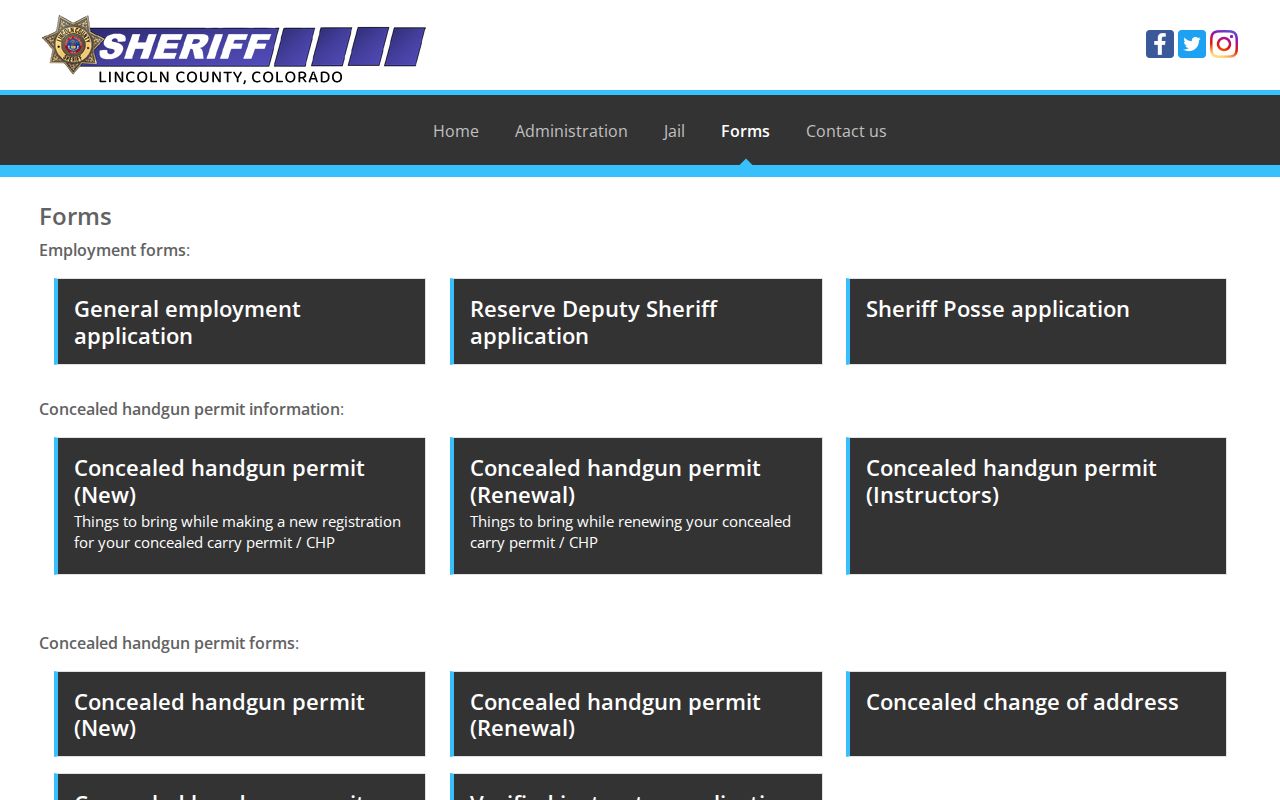
That request path is separate from a court disposition request because each office controls different records.
Find Lincoln County Arrest Records
Start with the record type. For a booking record, incident report, dispatch tape, criminal-history letter, or sheriff-created report, use the Lincoln County Sheriff's Office records request form. For filed charges, court dates, charge status, or a final disposition, use the Colorado Judicial Branch docket search, vendor register-of-actions access described by the Judicial Branch, or the Lincoln County Combined Courts records request process. For custody status after an arrest, VINE may help after a person is jailed, but it is not a court charge search.
- Identify whether the need is sheriff-side arrest information or court-side filed charge information.
- For sheriff records, request records from the Lincoln County Sheriff's Office and include the report number, citation number, party name, incident date, and reason for request when known.
- For filed charges, search the Colorado docket by date plus another filter, such as Lincoln County, courthouse, court type, party name, or case number.
- For the official charge disposition, request records from Lincoln County Combined Courts by online form, email, mail, or in person.
- For a municipal charge, such as a Town of Limon municipal matter, contact the municipal court or town payment channel rather than assuming it appears in state court records.
The sheriff records request form says requests are processed as soon as possible but may take up to three working days if a file is inactive, unusually long, or requires LCSO administration review. It also says some requests may be referred to the District Attorney or courts. That is important for arrest records because a single event can create sheriff records, prosecutor files, and court records.
Who Files Lincoln County Charges
The 23rd Judicial District Attorney's Office serves Douglas, Elbert, and Lincoln Counties for state-law criminal prosecutions. The DA decides and prosecutes filed criminal charges after arrest for many state cases. The office's Lincoln County contact is Office of the District Attorney, 103 Third Avenue, P.O. Box 307, Hugo, CO 80821-0307, phone (719) 743-2223. The prosecutor's role is different from the sheriff's role. The sheriff documents the arrest or incident; the DA decides what to file; the court keeps the filed case record.
The sheriff administration page identifies Sheriff Tom Nestor, Undersheriff Gordon D. Nall, Captain Michael L. Yowell, and other command staff.
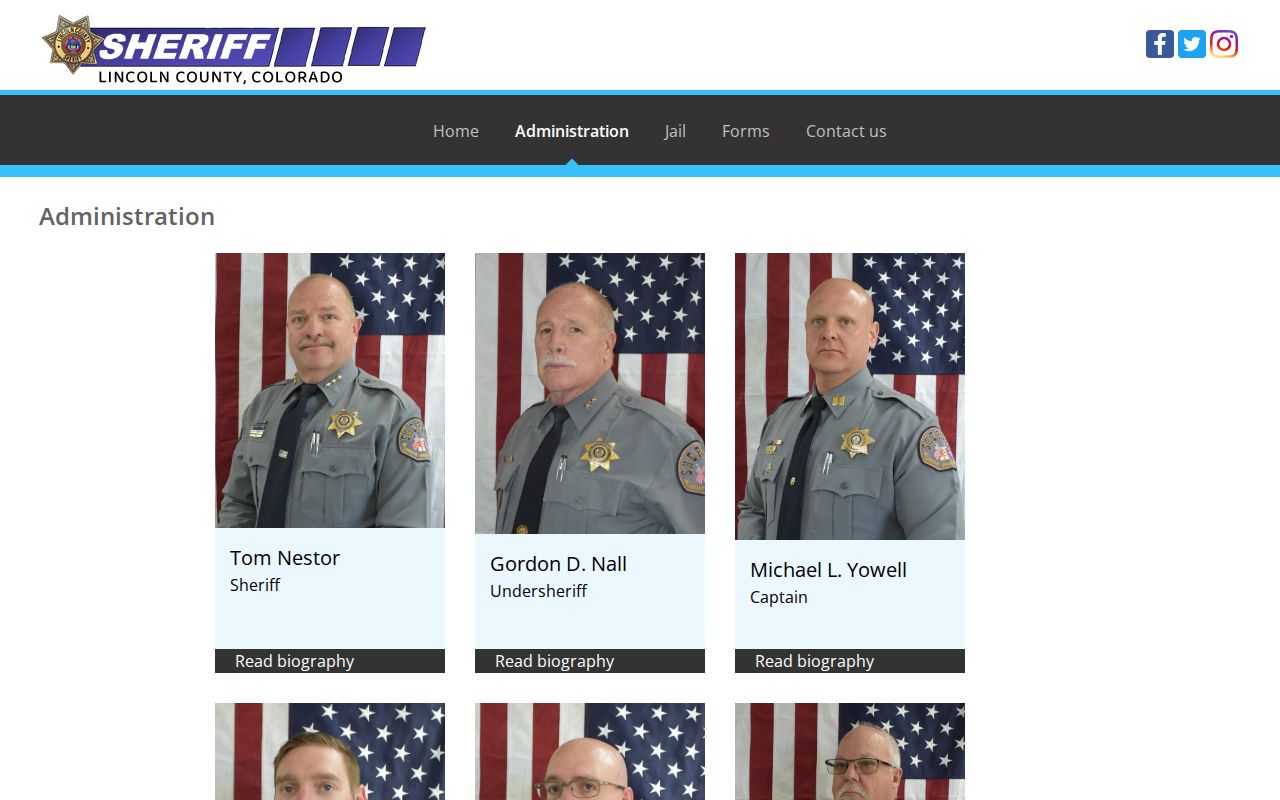
Those law enforcement contacts relate to sheriff records, while filed charges and dispositions belong to the court and prosecution path.
Charging Documents After Arrest
A charge record begins with a charging document or citation that places the accusation before a court. Colorado criminal records may use terms such as complaint, information, charge, citation, and disposition. A complaint can start a misdemeanor, traffic-criminal, or early felony matter. An information is a prosecutor's formal charging document. An indictment is connected to grand jury action and is less common in routine local case searches. The exact title matters less than what the filed document does: it tells the court and defendant what charge is being pursued.
| Document | Common Source | Typical Use | What to Check |
|---|---|---|---|
| Complaint | Law enforcement or prosecutor | Misdemeanors, traffic-criminal cases, and felony complaints before transfer or filing decisions. | Case number, charge count, statute, bond, and next court date. |
| Information | Prosecutor | Formal prosecution filing in many criminal cases. | Each count, severity level, amended counts, and plea or disposition by count. |
| Indictment | Grand jury | Serious or special matters where charges come from grand jury action. | Issuing court, filed counts, sealed portions, and later amendments. |
Note: A court charge after arrest may be different from the arresting officer's first description of the event.
Lincoln County Charge Status
Charge status can change as the court case moves. One arrest can produce several charges, and each charge can have a different status. A count may be pending at arraignment, amended after plea discussions, reduced as part of a plea agreement, dismissed by the court, or resolved by trial. Do not treat the first charge list as the final result unless the disposition is also shown.
| Status | What It Means | Reader Caution |
|---|---|---|
| Pending | The charge is filed and has not reached final disposition. | Hearings, plea talks, or motions may still change the record. |
| Amended | The filed charge language or count has changed. | Compare earlier and later entries before summarizing the case. |
| Reduced | The prosecutor or court record shows a lesser charge than the original accusation. | The final conviction, if any, may be for a different offense. |
| Dismissed | The count or case was ended without a conviction on that charge. | Other counts in the same case may still remain or be resolved differently. |
| Deferred | Judgment or sentence may be delayed under conditions. | Check later entries to see whether the case was dismissed or judgment entered. |
Charges vs Convictions
Charges after arrest are accusations. Convictions are outcomes. That distinction matters in Lincoln County arrest records because a sheriff record may show why a person was arrested, while the court file shows whether the prosecutor filed the charge, changed it, dropped it, proved it, or resolved it by plea. A public docket or register-of-actions result should be checked for final disposition before it is described as a conviction.
| Point | Charge | Conviction |
|---|---|---|
| Timing | Appears near arrest, citation, complaint, or information filing. | Appears after plea, verdict, or other final judgment. |
| Meaning | An alleged law violation. | A legally resolved finding or plea on a charge. |
| Where to verify | Docket, filed charging document, sheriff report, or prosecutor filing. | Court disposition, sentencing order, certified record, or register of actions. |
| Common mistake | Treating an arrest allegation as proven. | Ignoring later sealing, appeal, deferred judgment, or amended sentence entries. |
Request Lincoln County Arrest Reports
The Lincoln County Sheriff's Office records request form covers records in the sheriff's custody that may be released under C.R.S. 24-72-201 through 206 and C.R.S. 24-72-301 through 309. The form asks for today's date, request time, requester name, date of birth, ID status, physical address, mailing address, phone numbers, reason for request, and the type of record. It includes checkboxes or fields for criminal case report number, traffic citation or MTC number, criminal history letter or background check, other records, and dispatch tapes.
For incident information, the form also asks for law enforcement or criminal justice agency information, agency ID, party name, sex, date of birth, incident date and time, type of incident, and incident location. The applicant must affirm that the record will not be used for direct solicitation for pecuniary gain under C.R.S. 24-72-305.5. Fees must be paid at the time of request, and the form says to call during business hours for fee information.
The manifest image from Sheriff Tom Nestor's biography connects the current sheriff's office to Lincoln County arrest records and law enforcement record custody.
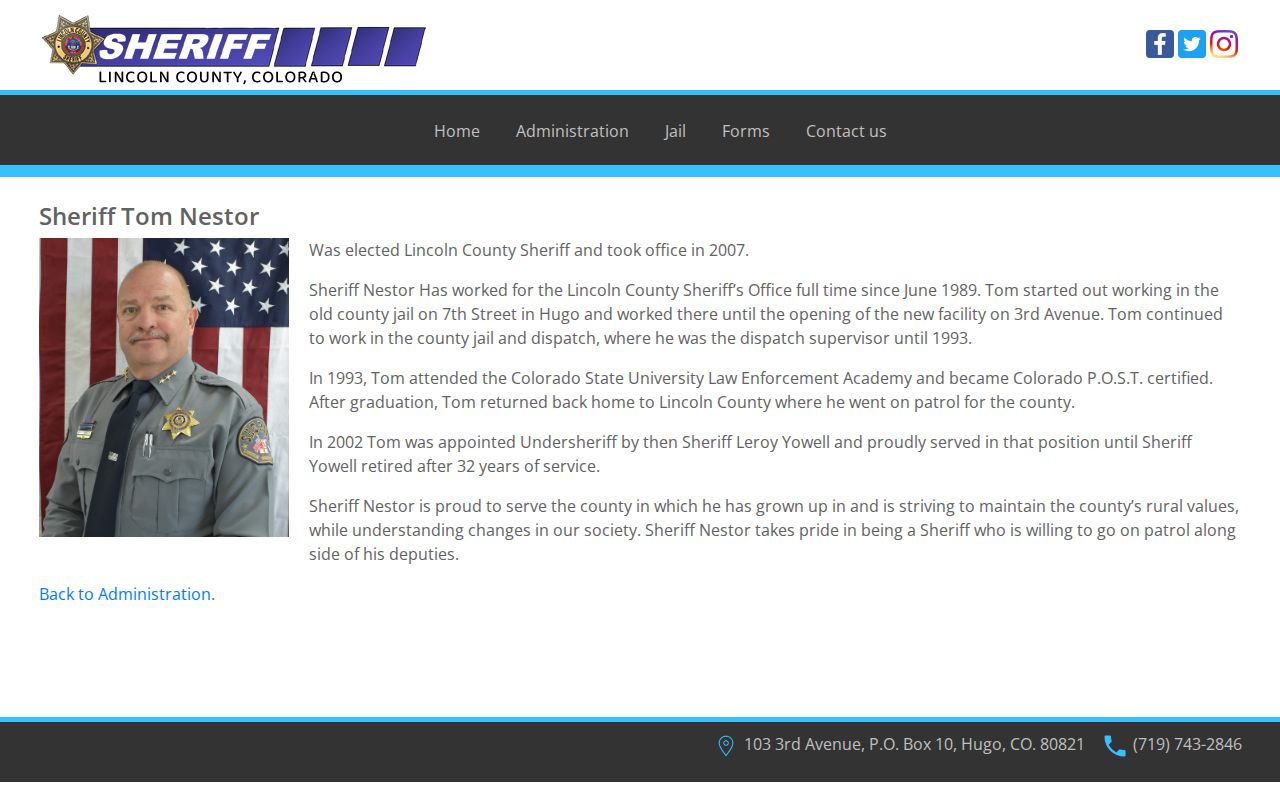
The biography also notes the sheriff's long service in the jail and dispatch side, which explains why arrest, booking, and dispatch records are sheriff records rather than court records.
Public Access to Lincoln Arrest Records
Colorado's public access rules treat court records and criminal justice records differently. Court records are handled through court access rules, the docket search, vendor register-of-actions access, and official court document requests. Sheriff records are requested under the Colorado Criminal Justice Records Act and related public-record rules. Records of official action are more open than investigative files, and custodians may deny or limit access when disclosure is barred by law, court rule, court order, or public interest.
Access split: Sheriff records can document arrest and booking facts. Court records document filed charges, hearings, dispositions, and sentences.
Sealed Lincoln Arrest Records
Colorado Judicial Branch self-help forms include sealing categories for arrest records where no charges were filed, non-convictions, convictions, municipal convictions, multiple cases, pardoned convictions, and special requests. A Lincoln County requester should first identify whether the record is a sheriff record, a County Court case, a District Court case, or a municipal court matter. That starting point controls the form path and the office that can confirm the record.
| Record Treatment | What It Does | What It Does Not Prove |
|---|---|---|
| Sealed | Removes a qualifying court record from ordinary public access. | It does not always erase every related sheriff, CBI, DMV, or private copy. |
| Suppressed | Limits access to authorized court users or people with court permission. | It does not mean the case never existed. |
| Expunged | Commonly applies to qualifying juvenile records under specific law. | It should not be assumed for adult arrest records without a valid order. |
Juvenile charge records, juvenile probation information, sealed cases, protected addresses, victim or witness information, and medical or mental health details are not ordinary public lookups.
Municipal Arrest Charges
Not every charge after arrest belongs to Lincoln County Combined Courts. Municipal ordinance and municipal traffic matters may be handled by a town municipal court. The Town of Limon payment page lists Municipal Court as a payment category, and the Limon code includes municipal court organization and traffic fine language. A person with a Limon municipal citation should use the citation, town payment page, or municipal court contact path to confirm the charge and payment or appearance requirements.
Municipal court records may not appear the same way as state County Court or District Court records. If a search of the state docket does not show the charge, check whether the citation identifies a municipal court. If the charge later results in a jail booking, VINE may help with custody notification after arrest, but VINE is not a charge filing database.
Restricted Lincoln Charge Records
Some Lincoln County arrest records and charge records may be withheld, redacted, or released only to authorized people. Juvenile matters are limited by C.R.S. 19-1-304 and related law. Suppressed cases may require government photo ID or may be unavailable to the public. Investigative sheriff records may be denied or referred. Sealed non-convictions, protected victim data, medical information, financial identifiers, and personal identifying information can also be removed from public copies.
When the record is needed for official use, request the exact record from the office that created it. Use the Sheriff's Office for arrest reports and sheriff-created records. Use Lincoln County Combined Courts for filed charges, dispositions, bond orders, sentencing, and certified copies. Use the District Attorney only for prosecution-related contact, victim process questions, or information the sheriff or court specifically refers to that office.